Showing posts with label 2012. Show all posts

BMW i3 Concept – dynamic, urban, emission-free.

The BMW i3 Concept is an uncompromisingly sustainable vehicle designed for urban areas. Driven purely by electric power and purpose-built to meet the demands of sustainable and emission-free mobility, it embodies an intelligent form of urban transportation and commuting.

The BMW i3 is a well-resolved all-round concept, with every detail conceived and optimised to fulfil its eventual purpose. Its innovative LifeDrive architecture renders the BMW i3 Concept light, safe, spacious and dynamic. Innovative use of materials and intelligent lightweight design, moreover, not only enable the i3 Concept to travel long distances on a single charge and provide superb safety in the event of a collision, they also help give the car its excellent driving dynamics. The electric motor over the rear axle – which generates output of 125 kW/170 hp and impressive torque of 250 Nm (184 lb-ft) from a standstill – and a small turning circle combine to deliver pleasingly crisp driving characteristics. The BMW i3 Concept accelerates from 0 to 60 km/h (37 mph) in under four seconds and from rest to 100 km/h (62 mph) in less than eight seconds.
All-electric – the BMW i3 Concept.
The electric motor of the BMW i3 Concept is designed primarily for operation in an urban environment, developing 125 kW/170 hp, with peak torque of 250 Nm (184 lb-ft). Typically of an electric motor, maximum torque is developed from standstill, in contrast to an internal combustion engine where torque increases with engine rpm. This makes the BMW i3 Concept highly agile and provides impressive acceleration. The BMW i3 Concept accomplishes 0-60 km/h (37 mph) in under four seconds and 0-100 km/h (62 mph) in under eight seconds.
At the same time the abundant torque is delivered over a very large rpm range, resulting in very smooth power delivery. The single-speed gearbox provides optimal power transmission to the rear wheels and accelerates the BMW i3 Concept to an electronically governed 150 km/h (93 mph) without loss of power. The electric drive also allows for deceleration by means of the accelerator pedal. After the driver eases up on the accelerator, the electric motor acts as a generator, converting the kinetic energy into electricity which is then fed back into the battery. Energy recuperation generates a braking effect which makes a significant contribution to vehicle deceleration.

A coasting facility makes this unique “single-pedal control” of acceleration and braking using just the accelerator even more user-friendly. When the driver eases off the pedal, the electric motor’s zero torque control keeps the drive train disconnected as long as the pedal is in this position. The vehicle now coasts without consuming power, driven by its own kinetic energy.
Compact and powerful – the electric motor.
The electric motor of the BMW i3 Concept not only offers attractive driveability; its innovative nature is particularly evident in the favourable power-to-size ratio. As a result of continuous development and refinement, the space requirements of the electric motor used in the BMW i3 Concept have been reduced by 40 per cent compared with the motor used in the MINI E. This compact drive unit is mounted over the rear axle, together with the power electronics, transmission and differential, and does not intrude into the interior. The power needed to drive the vehicle and to operate all other vehicle functions is supplied by specially developed lithium-ion battery cells. The BMW i3 Concept’s battery system has undergone detailed optimisation which significantly reduces the extent to which external factors can influence the vehicle’s power. Furthermore, an intelligent heating/cooling system keeps the battery at its optimal operating temperature at all times, which helps to significantly boost the performance and life expectancy of the cells.

The battery can be fully recharged in six hours at a standard power socket. If a high-speed charger is used, an 80 per cent charge can be achieved in just one hour.
Range extender increases the driving range.
As the MINI E field tests showed, 90 per cent of the mobility requirements of the pilot users could be met with the range of the MINI E. However, some customers want a longer driving range, or want their vehicle to be as flexible as possible. The BMW i3 Concept therefore offers an optional range extender, the REx, which allows the driving range to be increased. REx, a small, very smooth-running and quiet petrol engine, drives a generator which maintains the battery charge level to ensure that the vehicle can continue to run on electric power.

Posted on 03:52 / 0 comments / Read More

2012 Porsche 911 GT3 Cup

Price €161,750, Engine 3.8 liter boxer-6, Aspiration natural, HP 450 hp,
HP/Liter 118.4 hp per liter

Most successful race car now suitable for wider range of motorsport

It is the most successful race car on earth: The Porsche 911 GT3 Cup. With over 2,200 units sold, it is the undisputed number one amongst customer racing teams all over the world. Now, the new 911 GT3 Cup features a 100-litre FT3 safety fuel tank, which is filled via an opening in the front bonnet. Compared to its predecessor, the vehicle is now suitable for an even wider range of endurance racing. Moreover, the new fuel tank contributes to a further improvement of the high safety standards.

The 2012-spec Porsche 911 GT3 Cup is based on the lightweight 911 GT3 RS (997) street sports car. The power unit is largely identical to the production engine of the 911 GT3 RS with the same output of 450 bhp and the same maximum engine speed of 8,500 rpm. A race exhaust system with a controlled catalytic converter keeps emissions to a minimum.

The flared wheel arches at the front axle accommodate light alloy rims measuring 9.5Jx18 with 25/64-18 Michelin race tyres. The light alloy rims at the rear measure 12Jx18 with 30/68-18 tyres. Depending on the type of racing, the new 911 GT3 Cup features different rim specifications. The blade-type anti-roll bars at the front and rear are adjustable in seven positions allowing an extremely precise set-up for each race track. Exclusive to the Porsche Mobil1 Supercup which runs as support to Formula 1 is the PCCB Porsche Ceramic Composite Brake. This is also available for Porsche’s road models. Compared to the composite cast brakes in the Carrera Cups and the GT3 Cup Challenges, PCCB reduces the weight of the car by around 20 kilograms.

The cockpit of the new 911 GT3 Cup caters for the needs of the driver. The controls for the info display are positioned on the steering wheel which houses six switches. As in the production car, the reach and height of the steering wheel can be adjusted.


The new Porsche 911 GT3 Cup will be delivered to teams around the world from September and will be run in this specification for the 2012 and 2013 race seasons in selected one-make cup series. The price is 161,750 Euro plus value-added tax of the respective countries.

Currently, the 911 GT3 Cup competes in 19 Porsche brand trophy series worldwide. Moreover, it is run in various GT race series and at long distance events. The 911 GT3 Cup is the basis model of Porsche’s racing vehicle range. Additionally, Porsche Motorsport offers the 911 GT3 R for championships complying with GT3 regulations and the 911 GT3 RSR built according to GT2 rules.
Posted on 03:52 / 0 comments / Read More

All-new Chrysler 300 SRT8 2012

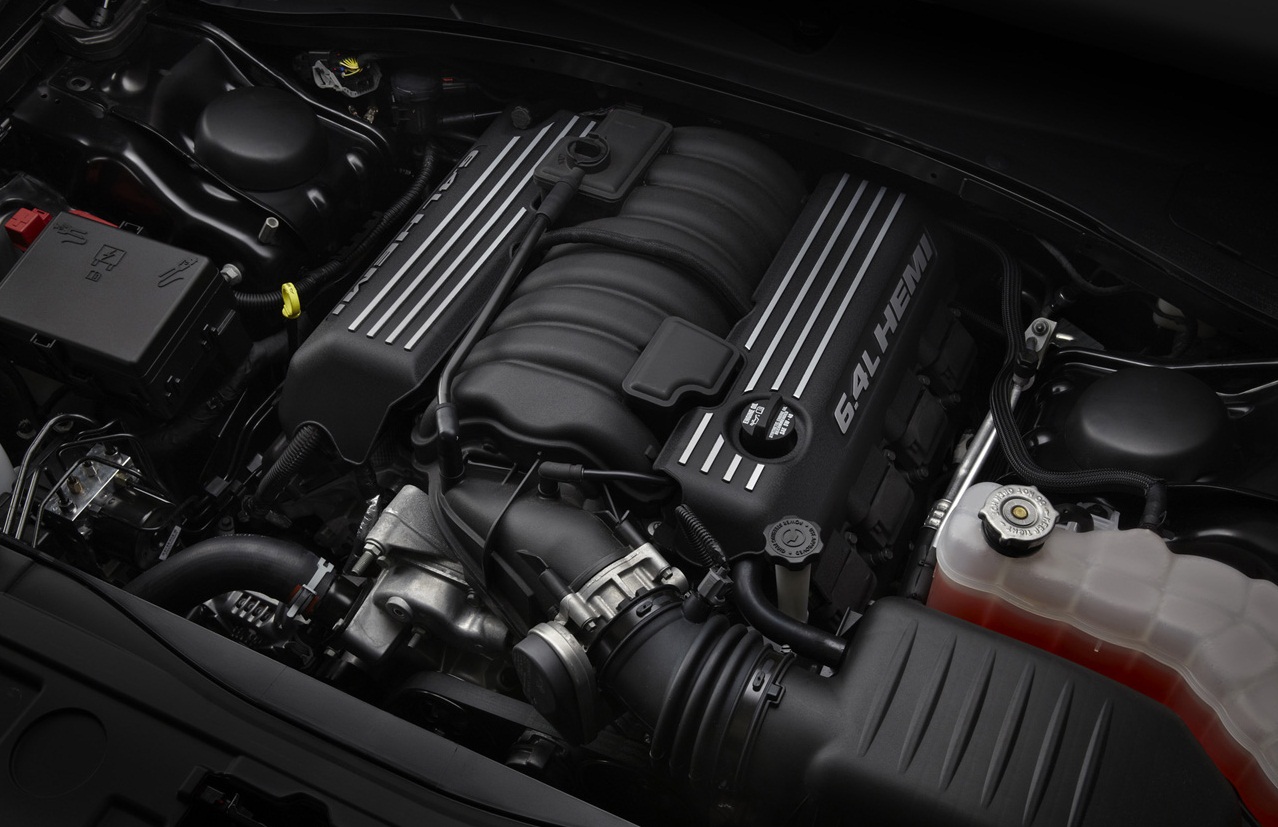
Engine 6.4 liter V8, Aspiration natural, HP 470 hp, HP/Liter 73.4 hp per liter, 0-60 mph high 4-second range, Torque 470 lb-ft, 1/4 mile high 12 second range, Top Speed 175 mph


2012 Chrysler 300 SRT8® Offers the Ultimate Combination Of World-Class Luxury and Performance

• All-new Chrysler 300 SRT8® with its 6.4-liter HEMI® V-8 offers ultimate combination of world-class luxury and performance in Chrysler’s most powerful, best-handling sedan ever

• Fuel Saver Technology with all-new active valve exhaust system improves fuel efficiency by an estimated 25 percent on the highway

• New, exclusive SRT heated steering wheel features mounted paddle shifters for hands on the wheel shifting both on road and at the race track

• New, two-mode adaptive damping suspension allows for selectable suspension tuning and also automatically adapts to road and driver inputs for optimal vehicle control

• 19-speaker Harman Kardon® audio system with innovative GreenEdge® technology is available with 900 watts of power

• Newly formed SRT brand led by President and CEO Ralph Gilles will continue to build benchmark high-performance vehicles for the Chrysler Group

July 15, 2011 , Auburn Hills, Mich. - The success of the modern Chrysler 300 launched in 2005 can be attributed to its broad appeal. People of all ages, incomes and lifestyles were attracted to the sedan’s dramatic styling, power and performance.

As the king of the E-segment lineup, the 2012 Chrysler 300 SRT8® adds high-performance hardware to the elegant proportions and head turning design to provide the ultimate combination of world-class luxury, power and handling. With 470 horsepower (351 kW) and 470 (637 N•m) lb.-ft. of torque, the 300 SRT8 is targeted at customers that seek heart pounding, adrenaline filled excitement, but don’t want to sacrifice comfort and innovative features to get it.

“The Chrysler 300 SRT8 is the no compromises king of the hill in the 300 model lineup in 2012, featuring the ultimate combination of world-class luxury and performance in our most powerful, best-handling Chrysler brand sedan ever,” said Olivier Francois, President and CEO — Chrysler Brand and Lead Executive for Marketing, Chrysler Group LLC. “Engineered and built for those customers who live for the sport of being first, the 300 SRT8 brings a much larger power band across the rpm range, along with intelligent performance attributes and safety and creature comforts for customers who are passionate about performance driving.”

2012 Chrysler 300 SRT8

The Street and Racing Technology (SRT) performance engineering team builds upon the all-new 2011 Chrysler 300 sedan already executed for a world-class luxury experience, to deliver Chrysler’s most powerful and best handling model ever.


Performance numbers include 0-60 mph acceleration in the high 4-second range; quarter mile in high 12-second range; 0-100-0 mph in less than 16 seconds, top speed of 175 mph and stopping power from 60-0 mph in 120 feet.


The return of the 300 SRT8 to the Chrysler lineup in 2012 evokes a strong comparison to the original high-performance production car of its time – the 1955 Chrysler 300. Known for simple, strong lines, excellent engineering, high levels of luxury and outstanding performance with the first modern American V-8 engine to produce 300 horsepower, the first Chrysler 300 (C-300) was styled by Virgil Exner, who radically redesigned the entire Chrysler line and created what they called "The Forward Look" in 1955. Without much chrome on the sides, his designs were simple, but strong. Exner is credited with creating the illusion of fast, forward movement.

The Chrysler C-300 won on both the road course and the “flying mile” at Daytona in 1955. In 1956, the Chrysler 300B model won both events again. In fact, the Chrysler 300s dominated NASCAR competition in 1955 and 1956, taking the overall championship in both years. A legendary and luxurious performance car was born. The “letter cars” quickly became the most desirable of the Chrysler lineup and became known as the “Beautiful Brutes.”
Posted on 03:45 / 0 comments / Read More
 
Copyright © 2011. Cars - Automotive - Auto Car . All Rights Reserved
Home | Company Info | Contact Us | Privacy policy | Term of use | Widget | Site map
Design by Auto Car . Published by cuteinkorean Templates